
Groundcover Placed Right the First Time
Mulch delivery and spreading in Portland for landscapes requiring material placement after seasonal cleanup or new bed installation
Portland's wet winters and moderate growing season create specific conditions that affect how mulch, compost, and topsoil perform in residential and commercial landscapes. Organic mulch applied too thinly breaks down before the following season, while material piled too deep against plant crowns holds moisture in ways that cause rot during the extended rainy months. The Haulfather Junk Removal delivers and spreads mulch, gravel, rocks, compost, and topsoil in Portland—handling the material selection logistics, delivery, and physical spreading so the work is done to a functional depth rather than an approximate one.
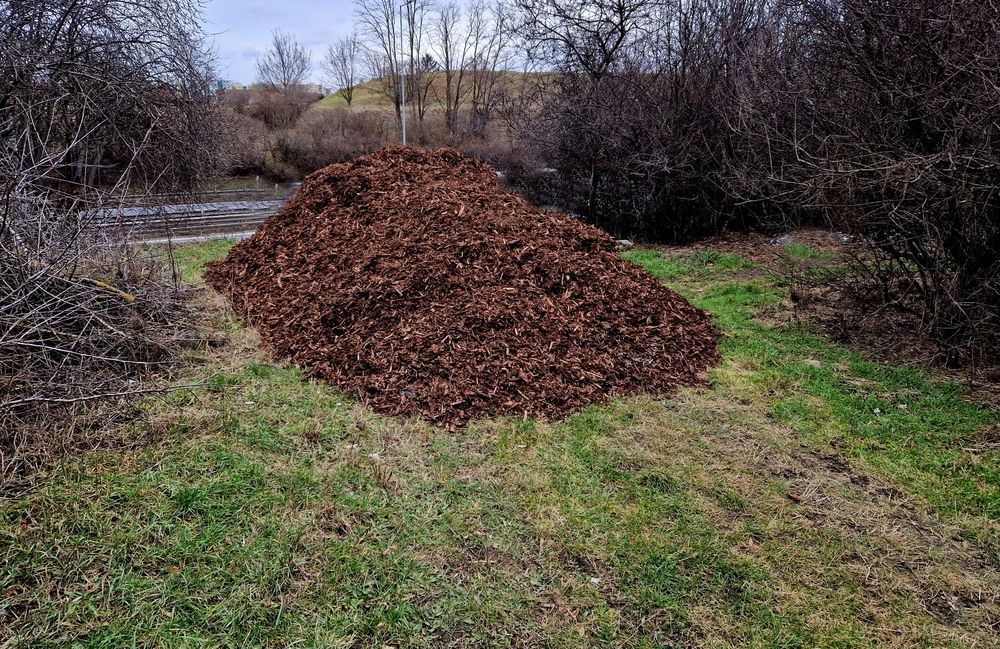
Delivery without spreading leaves the heaviest part of the job to the property owner—bulk material dropped in a single pile requires moving, wheelbarrowing, and distributing across beds that may be spread across the entire property. The spreading service handles that distribution with attention to grade, plant proximity, and coverage depth. Gravel and rock applications require a different approach than organic mulch: compaction behavior, drainage impact, and weed barrier compatibility all factor into how the material is placed. Compost and topsoil applications for lawn renovation or new bed preparation involve grading the material to a consistent depth rather than simply covering existing ground.
Arrange a delivery estimate based on your square footage and material type to get an accurate quantity before ordering.
How Mulch and Material Spreading Addresses Landscape Needs
Accurate material quantity starts with measuring bed area and determining the target depth—the two variables that define how many cubic yards are needed before any delivery is scheduled. Underordering means a second delivery trip, and overordering leaves excess material that requires its own disposal. For organic mulch in Portland's climate, two to three inches of coverage is the functional range that retains moisture through dry summers without creating anaerobic conditions against plant stems during wet fall and winter months. Gravel and decorative rock applications vary based on whether the goal is drainage improvement, weed suppression, or aesthetic coverage over a landscape fabric layer.
After spreading is complete, beds show consistent coverage depth across the full planted area, edges are defined without material spilling onto hardscape, and material is kept clear of plant crowns and tree trunks. For compost or topsoil applications, the visible result is an even surface grade ready for seeding, sodding, or planting—not the mounded, uneven finish that self-spreading often produces. The Haulfather Junk Removal treats material placement as a finishing task, not just a delivery.
The service covers multiple material types in a single visit when a project involves both organic mulch in planted beds and gravel in adjacent pathways or drainage areas. Material sourcing, quantity calculation, delivery scheduling, and spreading are all part of the same service rather than separate coordination tasks. Properties with limited vehicle access, steep grades, or beds located away from the street require equipment and crew planning that differs from a standard front-yard delivery.
What Property Owners Usually Ask About Delivery and Spreading
Most questions before booking center on quantities, material differences, and what the spreading portion of the service actually involves on the ground.
How do I know how much mulch or material to order?
Square footage of the area multiplied by desired depth in inches, divided by 324, gives the approximate cubic yards needed—your crew can verify this calculation during the estimate so you don't over- or under-order.
What materials does the delivery and spreading service cover?
The service includes mulch, gravel, decorative rock, compost, and topsoil—each material has different spreading requirements based on density, target depth, and the surface it's being applied to.
Why does Portland's rainfall pattern affect mulch depth recommendations?
Extended wet seasons keep soil moisture high for months at a time, so mulch applied too deeply against woody stems holds that moisture in contact with bark, which can cause fungal issues and crown rot over a full winter.
When is the best time to schedule mulch spreading in the Portland area?
Late spring after soil has warmed and early fall before the rainy season begins are the two most practical windows—spring applications support summer moisture retention, and fall applications insulate roots before ground temperatures drop.
What is the difference between compost and topsoil for a new bed or lawn area?
Compost improves existing soil structure and adds organic matter, while topsoil is used to build grade, fill low spots, or establish a base layer in areas where existing soil has been removed or is insufficient for planting.
The Haulfather Junk Removal can confirm material quantities, schedule delivery, and complete spreading in a single appointment—submit your bed dimensions and material preference to get a delivery and labor estimate specific to your property.